
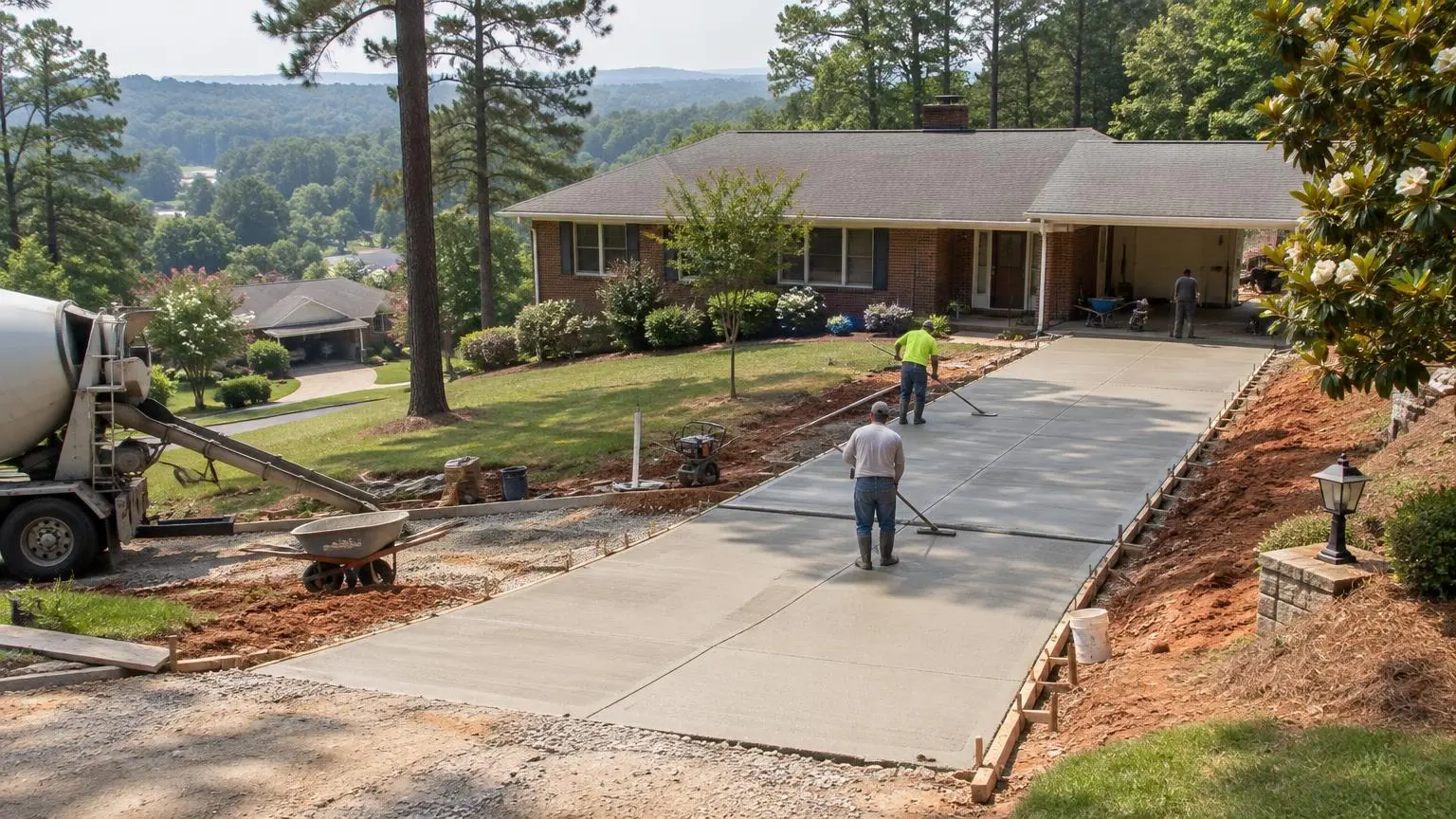
Garage floors, carports & shed pads
Concrete Slabs in Athens, GA
A flat, solid floor under the building or equipment, built on firm ground and sloped so water leaves.
- Free on-site measuring and a written, itemized quote
- Clay subgrade checked and a compacted stone base on every slab
- Athens-Clarke driveway permit and Georgia 811 locates handled before we dig
Slabs for Garages, Carports, Sheds and Equipment
Concrete slabs carry more than people think: cars and trucks, mowers and tractors, workbenches, HVAC units and, at the edges, the walls of a building. Around Athens, many 1960s to 1980s homes have a carport or attached garage on an original slab, and many back yards have added a shed, a workshop or a generator that needs a pad. Whatever goes on top, the slab needs firm ground under it, the right thickness and a slope that keeps water out.
Garage and carport floors
Old garage and carport floors fail in a few common ways. The middle sinks and holds a puddle. Cracks spread across the floor and step apart. The slab drops away from the house or the driveway, leaving a lip. Edges where posts or walls sit break up. In many cases the floor can be broken out and replaced while the garage or carport stays standing, working around posts and bracing where needed. HomeGuide's slab guide describes most two-car garage floors as reinforced concrete 4 to 6 inches thick, and we size yours to what parks on it.
What goes into a slab that lasts
- Firm subgrade: topsoil, roots and soft clay or fill dug out
- Compacted stone base: placed in layers so the slab is evenly supported and drains
- Thickness for the load: more where trucks, trailers or tractors park
- Reinforcement: rebar or welded wire mesh throughout
- Thickened edges or footings: under walls and posts, sized from the building plans
- Slope: garage floors fall toward the door so water runs out
- Control joints: laid out to manage shrinkage across a wide floor
Shed and workshop pads
A shed pad is lighter work than a garage floor, but it still needs a level, compacted base or the shed racks and the doors bind. HomeGuide's slab guide says shed slabs are usually about 4 inches thick and typically do not need reinforcement; on larger buildings or soft clay we often add mesh anyway. On a sloped back yard, the high side may need to be cut in and the low side built up with compacted stone and formed deeper. We set the pad slightly above the surrounding grade so rain stays out and can add a ramp for a mower or wheelbarrow.
Clay, rain and slabs
Red clay under a slab is fine when it is compacted and kept at a steady moisture level. Problems start when roof water pours off a garage or shed and soaks the ground along one edge, or when one part of a slab sits on undisturbed clay and another on loose fill. That is how slabs crack in a straight line and one side drops. We look at where the gutters and downspouts empty, dig past fill to firm ground, and keep the base consistent across the whole footprint.
Building a new structure
New garages, workshops and larger sheds may need building approval, and setbacks decide where they can sit on the lot. Before pouring a slab for a new building, we check what Athens-Clarke County or your city requires and coordinate with whoever is framing, so the slab size, edges and anchor bolts match the plans.
Other pads we pour
- HVAC condenser and generator pads
- Trash and recycling pads beside the garage
- Side parking and boat or trailer pads
- Hot tub bases, sized and reinforced for a filled tub
Care for a garage floor
Keep gutters and downspouts working so water does not collect along the walls. Seal the floor or ask about a coating to resist oil stains. HomeGuide's slab guide notes a slab is walkable after about 1 to 2 days, drivable after about 1 to 2 weeks and fully cured after 28 to 48 days.
Slab Work We Quote
Floors and pads for buildings, vehicles and equipment.
Garage floors
New floors for new garages and replacement floors inside standing ones.
Carport slabs
Replacement slabs under existing carports, worked around the posts.
Shed and workshop pads
Level, compacted pads sized to the building, with an optional ramp.
Thickened edges
Deeper concrete where walls and posts bear, per the plans.
Equipment pads
Bases for HVAC units, generators, bins and hot tubs.
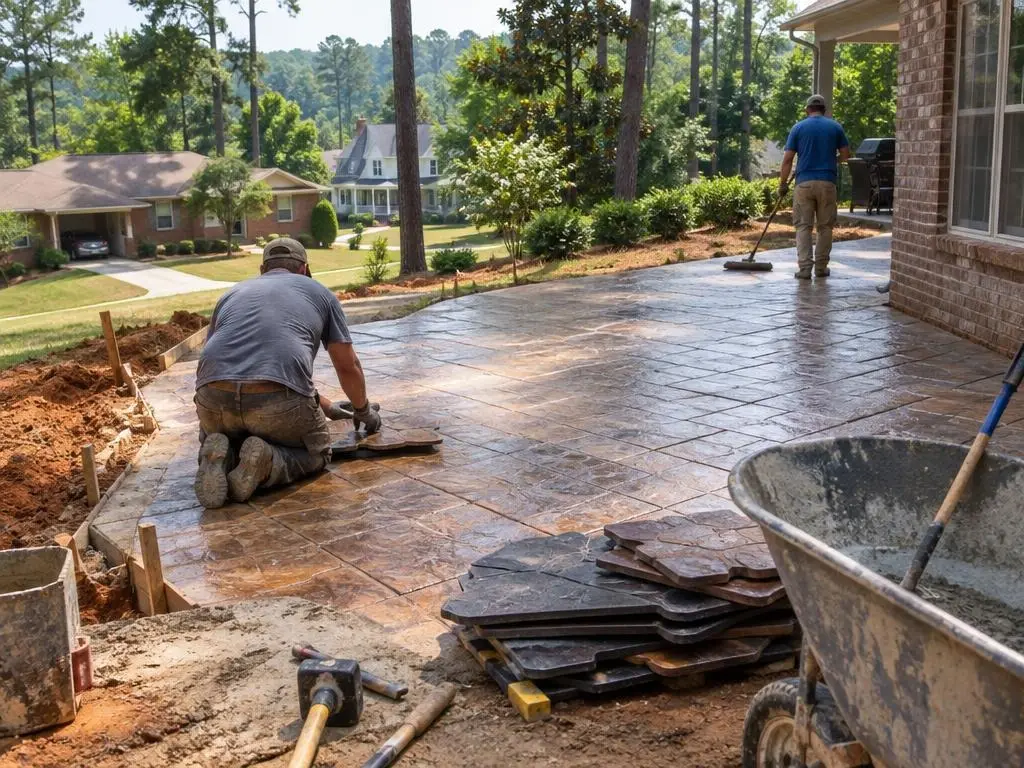
Typical Concrete Slab Costs
| Item | Published range |
|---|---|
| 4-inch slab, per sq ft | $6 to $8 |
| 6-inch slab, per sq ft | $8 to $10 |
| 10 x 10 ft slab | $600 to $1,200 |
| 20 x 20 ft slab | $2,400 to $4,800 |
| Two-car garage floor | $2,400 to $6,900 |
| Shed foundation, 10 x 10 to 20 x 20 ft | $600 to $4,800 |
| Gravel base, per sq ft | $1 to $3 |
Figures from HomeGuide's concrete slab cost guide (national averages). Athens-area pricing can run higher or lower, and removal, slope, access and finish all change the total. The written estimate after measuring is your price.
Start to Finish
1. Match the plans
Slab sized to the building or equipment and approvals checked.
2. Dig and base
Old floor or turf removed, soft soil dug out and stone compacted.
3. Forms and steel
Forms, thickened edges and reinforcement placed.
4. Pour and cure
Poured, finished, jointed and cured before building starts.
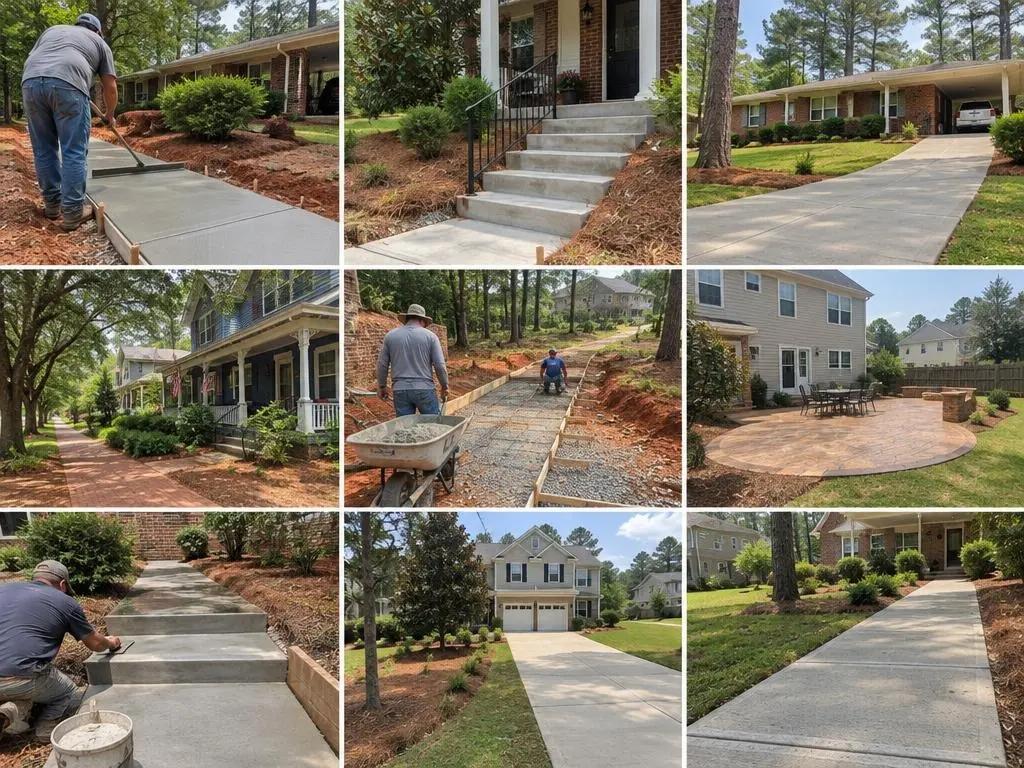
Why Choose Us for Concrete Slabs
Built to the drawings
Size, edges and anchors match the structure going on top.
One consistent base
Fill dug out so the whole slab sits on the same firm ground.
Concrete Slabs Questions
How thick should a garage floor be?
HomeGuide describes most two-car garage floors as reinforced concrete 4 to 6 inches thick. We add depth where trucks or heavy equipment park and under walls.
Can you replace a carport slab without removing the carport?
Usually. We break out the old slab around the posts, rebuild the base and pour new concrete. If posts or footings are damaged, we tell you before work starts.
Does a shed slab need rebar?
HomeGuide says shed slabs are usually about 4 inches thick and typically do not need reinforcement. For larger sheds or soft clay we often add mesh to keep any cracks tight.
How long before I can build on a new slab?
Framing can often start within days, but HomeGuide's slab guide puts full cure at 28 to 48 days. We give you timing for your project.
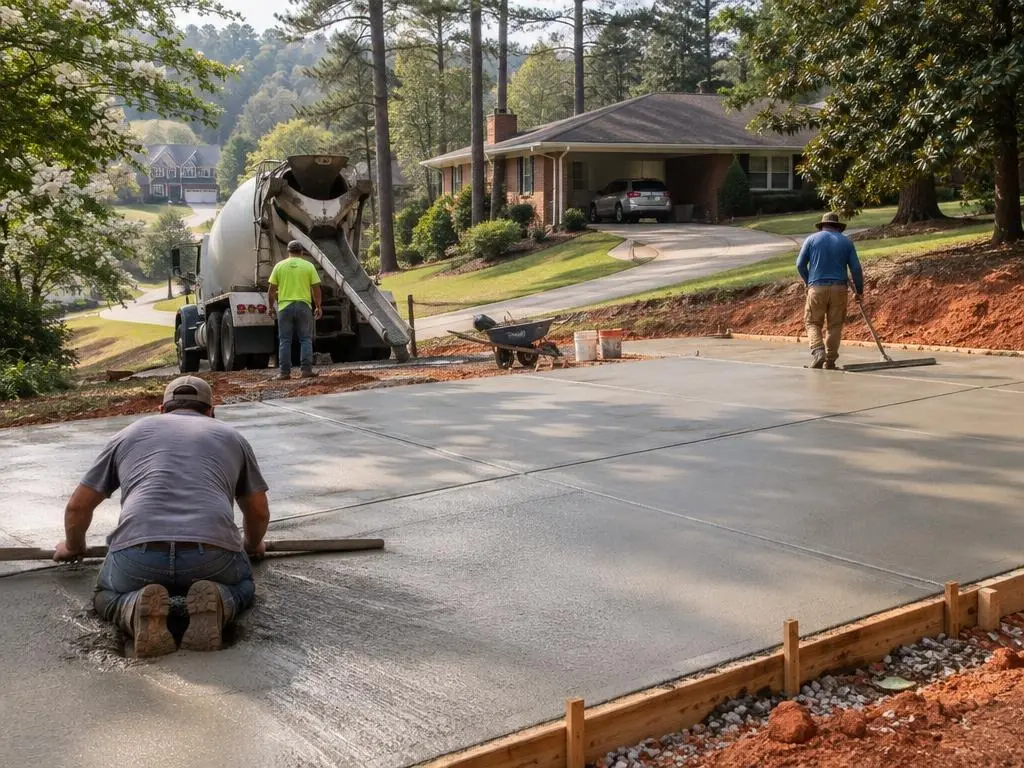
Concrete Slabs Service Areas
- Concrete Contractors in Athens, GA
- Concrete Contractors in Watkinsville, GA
- Concrete Contractors in Bogart, GA
- Concrete Contractors in Winterville, GA
- Concrete Contractors in Jefferson, GA
- Concrete Contractors in Commerce, GA
- Concrete Contractors in Winder, GA
- Concrete Contractors in Statham, GA
- Concrete Contractors in Monroe, GA
- Concrete Contractors in Madison, GA
- Concrete Contractors in Danielsville, GA
- Concrete Contractors in Comer, GA
- Concrete Contractors in Hull, GA
- Concrete Contractors in Colbert, GA
- Concrete Contractors in Lexington, GA
- Concrete Contractors in Crawford, GA
- Concrete Contractors in Arnoldsville, GA
- Concrete Contractors in Nicholson, GA
- Concrete Contractors in Hoschton, GA
- Concrete Contractors in Braselton, GA
- Concrete Contractors in Maysville, GA
- Concrete Contractors in Bishop, GA
- Concrete Contractors in Arcade, GA
- Concrete Contractors in North High Shoals, GA
Get a Concrete Slabs Estimate
Free on-site estimates for garage floors, carport slabs and pads around Athens.